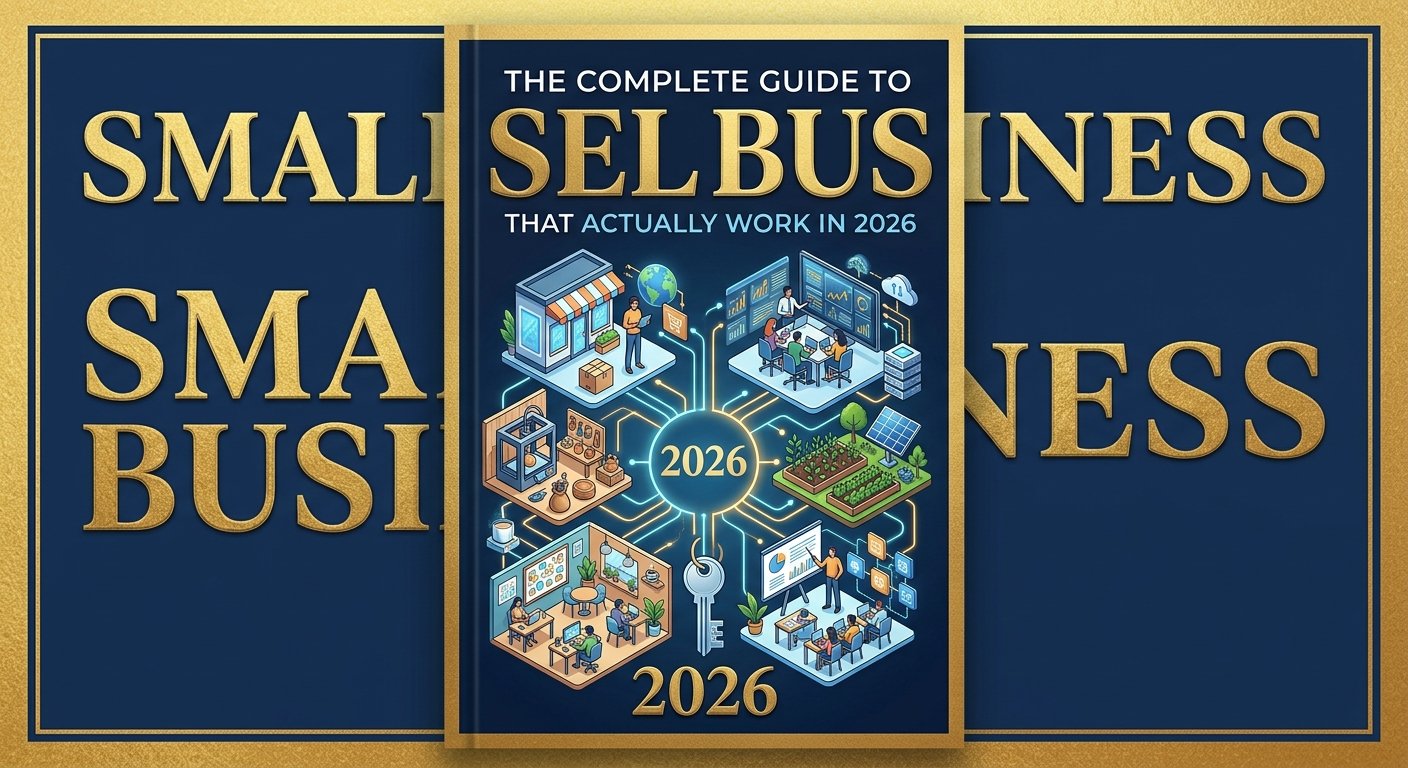
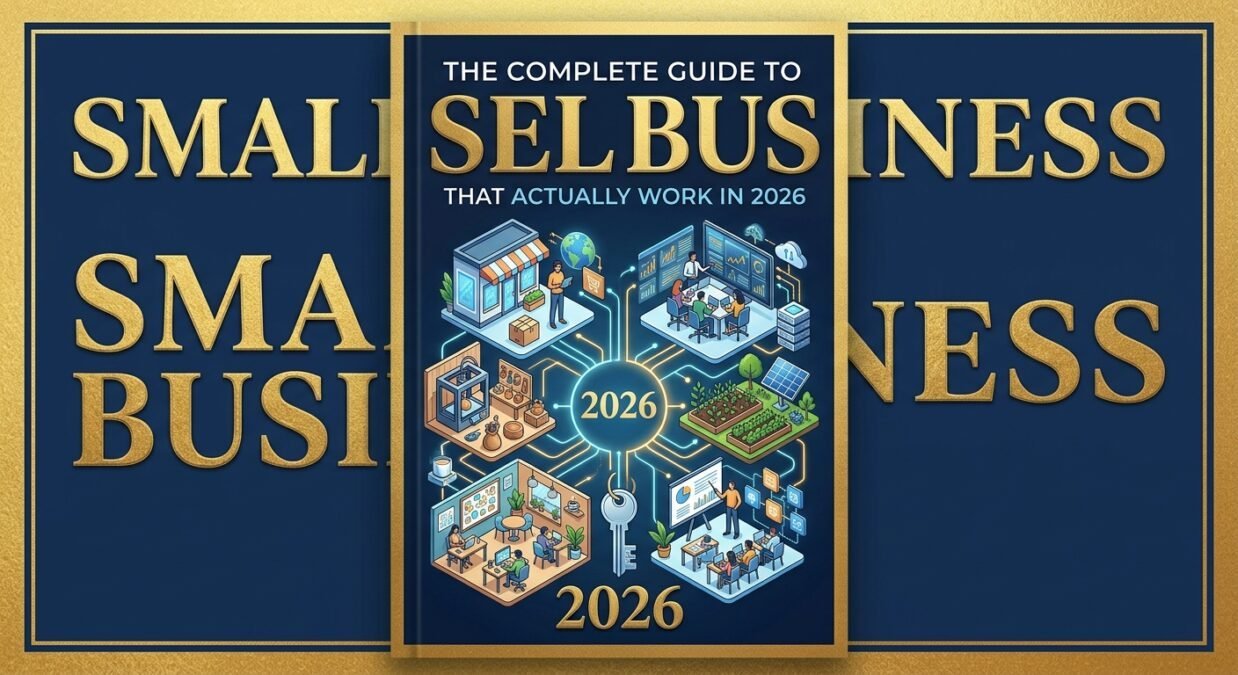
Starting a business has never been more accessible, yet the sheer volume of options can feel paralyzing. Everywhere you turn, someone is pitching a new side hustle, a passive income scheme, or a can’t-miss opportunity. The noise is deafening, and most of it misses the point entirely. The real question isn’t whether an idea sounds exciting on paper. It is whether that idea fits your skills, your market, and the economic realities of the moment you are launching.
This guide cuts through the clutter. Drawing on current market data, entrepreneur surveys, and real-world case studies, it maps out the small business ideas that are genuinely gaining traction in 2026. More importantly, it explains why they work, what they cost to start, and how to tell whether one is right for you. Whether you are looking for a low-investment side venture or a full-scale operation, the goal here is clarity, not hype.
The entrepreneurs who succeed are not the ones who chase every trend. They are the ones who understand their own strengths, identify a specific problem worth solving, and execute with consistency. As the 2026 OnDeck Small Business Cash Flow Trend Report found, ninety-four percent of small business owners project growth in the year ahead, matching an all-time survey high . That optimism is well-founded, but only for those who approach business building with discipline and self-awareness.
Why Small Business Ideas Fail Before They Even Start
Most business failures are not caused by bad products or poor marketing. They are caused by misalignment. Someone launches a business because it looks profitable, not because they have any genuine interest or aptitude for the work. Six months later, the grind of daily operations wears them down, and the business quietly dies. Passion alone is not enough, but without some baseline of interest or skill, the odds of survival drop dramatically.
The statistics on small business failure are sobering. Approximately twenty percent of new businesses fail within the first year, and that number rises to roughly half within five years . The first year is rarely the problem. The danger zone is between years two and five, when initial enthusiasm fades and the reality of sustained effort sets in . Understanding this timeline matters because it reframes what you should be worried about. Launch is not the hard part. Persistence is.
The second major killer is solving a problem nobody actually has. Entrepreneurs fall in love with their own ideas and forget to validate demand before investing time and money. A better approach is to identify a pain point that people are already paying to solve, and then offer a superior or more convenient solution. This is why service businesses with recurring revenue models tend to outperform product businesses that require constant customer acquisition.
The Three Cost Tiers of Starting a Business
Understanding startup costs is essential before choosing a direction. The amount you need varies wildly depending on your business model, but patterns emerge when you categorize by what the business actually requires. Skills-based businesses that sell your expertise cost the least. Equipment-based businesses require specialized tools but no storefront. Facility-based businesses demand significant capital for space and buildout.
Skills-based businesses include freelance writing, graphic design, consulting, bookkeeping, and virtual assistance. These can launch for under a thousand dollars in many cases, with the primary investment being your time and perhaps a website . The trade-off is that income is capped by your personal hours until you hire or productize your services.
Equipment-based businesses include pressure washing, landscaping, mobile detailing, and cleaning services. These typically require five thousand to fifty thousand dollars in startup capital, mostly for equipment . The advantage is that the equipment becomes an asset, and the business can scale by adding crew members and vehicles.
Facility-based businesses include restaurants, salons, gyms, and retail stores. These require fifty thousand to several hundred thousand dollars, driven by lease deposits, renovations, permits, and inventory . The barrier to entry is high, but so is the potential for building substantial equity in a physical location.
| Business Type | Typical Startup Cost | Primary Expense | Revenue Potential |
|---|---|---|---|
| Freelance Services | $500 – $5,000 | Website, software, marketing | Hourly or project-based |
| Home-Based E-Commerce | $1,000 – $10,000 | Inventory, platform fees, ads | Scalable with product-market fit |
| Mobile Services | $5,000 – $50,000 | Equipment, vehicle, insurance | Recurring with repeat clients |
| Brick-and-Mortar Retail | $50,000 – $250,000 | Lease, buildout, inventory | Higher ceiling, higher risk |
| Food and Beverage | $80,000 – $750,000 | Equipment, lease, permits, staff | High volume, thin margins |
Low-Investment Small Business Ideas for Lean Starters
The most accessible path to entrepreneurship begins with service-based businesses that require little more than a laptop, a phone, and a willingness to work. Freelance writing, social media management, and virtual assistance are all viable options that can be started on the side while maintaining employment. The advantage is that you can validate demand and build a client base before committing fully.
Bookkeeping is one of the more profitable options in this category. Small businesses increasingly outsource their financial record-keeping, and solo practitioners enjoy high margins because their cost structure is minimal . The barrier is certification and trust, but once established, bookkeeping clients tend to stay for years. It is recurring revenue in its purest form.
Cleaning services offer another low-barrier entry point. Residential cleaning requires basic supplies and transportation, and the demand is consistent because people will always need their homes cleaned. Starting solo limits expenses and maximizes margins, and the business can scale by adding team members and commercial contracts. The work is physically demanding, but the revenue is predictable and the overhead is minimal.
Service-Based Small Business Ideas with Recurring Revenue
The most durable small businesses are built on recurring revenue models. Instead of constantly hunting for new customers, you build a base of clients who pay you every month or quarter. This creates predictable cash flow, which makes planning and investing far easier. Service businesses naturally lend themselves to this model because they address ongoing needs rather than one-time purchases.
Lawn maintenance is a classic example. Once a customer hires you, they need their lawn mowed every week or two throughout the growing season. The residential landscaping market is expected to grow at a compound annual rate of nearly eleven percent over the next four years, driven by time-poor homeowners who would rather outsource yard work than spend their weekends on it . The startup costs are moderate, and the work is straightforward to learn.
Pest control offers similar dynamics with even stronger customer retention. Residential and commercial customers alike pay monthly or quarterly to keep their properties free of pests, and the market is projected to grow from roughly twenty-seven billion dollars to forty-four billion by 2035 . The recurring nature of the service means that once you build a customer base, revenue becomes reliable. The industry is also becoming more sophisticated, with data-driven monitoring playing a growing role in service delivery.
Online and Digital Small Business Ideas
The internet has democratized entrepreneurship in ways that were unimaginable a generation ago. Digital products, online courses, and content-based businesses allow solo entrepreneurs to reach global audiences without inventory or physical space. The startup costs are minimal, and the scalability is virtually unlimited because the marginal cost of delivering a digital product is essentially zero.
Online courses and cohort programs are particularly attractive for anyone with expertise in a marketable skill. The global e-learning market is projected to reach hundreds of billions of dollars, driven by demand for flexible, self-paced learning . The challenge is standing out in a crowded marketplace, which means niching down is essential. A course on Excel for accountants will outsell a generic course on spreadsheet skills every time.
Paid newsletters and private communities represent another model gaining momentum. Platforms like Substack and Circle allow creators to build paid audiences around their expertise. The economics work because you are monetizing a small, highly engaged audience rather than chasing mass appeal. A newsletter with five hundred paying subscribers at ten dollars a month generates five thousand dollars in monthly revenue, which is a meaningful income for a solo operator.
Creative and Product-Based Small Business Ideas
For those who prefer working with their hands or expressing creativity, product-based businesses offer a different path. The rise of print-on-demand and dropshipping has lowered the barrier to entry for e-commerce, allowing entrepreneurs to test product ideas without committing to inventory. Custom home decor, pet products, and apparel are all viable niches with proven demand.
The pet industry is particularly robust. Global pet care spending reached over two hundred seventy billion dollars in 2025 and continues to climb, with average household spending projected to reach nearly fifteen hundred dollars per animal . Pet owners, especially younger demographics, are eager to buy personalized items for their furry companions. Print-on-demand services make it possible to offer custom pet beds, bandanas, and feeding mats without holding inventory.
Digital product creation offers an even leaner model. Templates, planners, journal prompts, and design assets can be created once and sold thousands of times. The key is identifying a specific audience with a specific need. A collection of resume templates designed for healthcare professionals will outperform a generic resume template pack. Specificity is what drives conversion in a saturated market.
Small Business Ideas for the Skilled and Experienced
Consulting and advisory businesses leverage expertise you have already developed. The key is niching down rather than positioning yourself as a generalist. A marketing consultant who specializes in dental practices can charge premium rates because they understand the unique challenges of that industry. Specialized consultants attract better clients and command higher fees than generalists because they bring industry-specific knowledge to the table .
Productized services take this concept further by packaging expertise into fixed-price offerings. Instead of quoting every project differently, you offer the same service at the same price to every client. A monthly SEO retainer that includes keyword research, content optimization, and reporting is a productized service. The client gets predictable costs, and you get predictable revenue. This model works particularly well for marketing, design, and copywriting services.
The trades offer another path for those with practical skills. Electricians, plumbers, HVAC technicians, and carpenters all have the option of starting their own businesses after gaining experience working for others. The startup costs are moderate, the demand is constant, and the barrier to entry is the skill itself. These businesses are not glamorous, but they are reliable, and they often generate solid incomes for owner-operators.
Legal and Administrative Requirements for New Businesses
Before launching any business, you need to handle the legal and administrative basics. The specific requirements vary by country, state, and industry, but certain steps are universal. Registering your business structure, obtaining necessary licenses, and understanding your tax obligations are non-negotiable. Skipping these steps creates legal exposure and can prevent you from opening a bank account or signing contracts.
In Pakistan, for example, businesses typically need to register with the Securities and Exchange Commission of Pakistan for incorporation, obtain a National Tax Number from the Federal Board of Revenue, and secure a trade license from the local municipal authority . Professional tax is levied separately by provincial excise and taxation departments. The common mistake is assuming that federal tax registration covers all obligations. It does not. Provincial and local requirements are separate and must be addressed independently.
For service-based businesses operating from home, the requirements are often lighter. A sole proprietorship may require only a business registration and a tax number. But even home-based businesses should verify zoning regulations and homeowner association rules before operating. The cost of compliance is almost always less than the cost of non-compliance, which can include fines, penalties, and forced closure.
How to Validate a Small Business Idea Before Investing
Validation is the process of confirming that people will actually pay for what you plan to offer. It is the step most aspiring entrepreneurs skip, and it is the reason so many businesses fail. Validation does not require a full product or a polished website. It requires conversations with potential customers, a simple landing page to gauge interest, and a willingness to hear “no” without taking it personally.
The leanest approach is to pre-sell. Before building anything, offer the product or service at a discount to early adopters. If people pay, you have validation. If they do not, you have saved yourself months of wasted effort. This works for services, courses, and physical products alike. The key is being honest about what you are offering and when it will be delivered.
Another approach is to study competitors. If other businesses are succeeding in a niche, that is evidence of demand. You do not need to reinvent the wheel. You need to understand what customers like about existing options and what frustrates them. That gap is your opportunity. A better user experience, faster delivery, or more personalized service can be enough to win market share.
Frequently Asked Questions
What are the most profitable small business ideas to start in 2026?
The most profitable options tend to be service-based businesses with recurring revenue models. Bookkeeping, pest control, lawn maintenance, and cleaning services all generate predictable income because customers pay repeatedly for ongoing needs . Consulting and productized services also perform well because they leverage expertise rather than inventory. The common thread is low overhead, high margins, and a customer base that returns month after month rather than making one-time purchases.
How much money do I need to start a small business?
The amount varies dramatically by business type. Skills-based businesses like freelance writing or consulting can launch for under a thousand dollars . Equipment-based businesses like landscaping or mobile detailing typically require five thousand to fifty thousand dollars . Facility-based businesses like restaurants or salons require significantly more, often exceeding a hundred thousand dollars. A useful rule is to calculate your startup costs plus six months of personal living expenses plus three months of business operating costs plus a twenty percent buffer for surprises .
Can I start a small business while keeping my full-time job?
Yes, and for many people, this is the smartest approach. Starting on the side allows you to validate demand, build a client base, and generate revenue before you leave the security of employment. Freelance writing, graphic design, social media management, and bookkeeping all follow this pattern . The key is managing your time and setting boundaries so that neither the job nor the side business suffers. Once your side income replaces fifty to seventy-five percent of your salary, the transition becomes far less risky.
What is the biggest mistake new small business owners make?
Underestimating recurring costs and failing to maintain sufficient working capital are the most common financial mistakes. Many entrepreneurs focus on launch expenses and forget that monthly costs like insurance, software subscriptions, and marketing continue regardless of revenue . The second biggest mistake is skipping validation. Building a product or service without confirming that people will pay for it is the fastest route to failure. Conversations with potential customers before you build are worth more than any business plan.
How long does it take for a small business to become profitable?
Profitability timelines vary widely by business type and model. Service businesses with low overhead can break even within months if they secure clients quickly. Equipment-based businesses often take six to twelve months to reach consistent profitability as they build a customer base . Facility-based businesses may take two to three years. The break-even point is when total revenue equals total costs. Understanding this calculation before you launch helps you set realistic expectations and plan your cash flow accordingly.
Conclusion
Choosing the right small business ideas is less about finding the perfect concept and more about matching an opportunity to your skills, resources, and tolerance for risk. The most successful entrepreneurs are not the ones who chase every trend. They are the ones who understand their own strengths, validate demand before investing heavily, and execute with consistency over years rather than weeks.
The landscape in 2026 favors lean, service-oriented businesses with recurring revenue models. Skills-based ventures cost little to start, scale efficiently, and generate predictable income. Equipment-based businesses require more capital but build tangible assets. Online and digital products offer unlimited scalability for those who can cut through the noise with specificity and quality.
The final insight is this: a business is not a lottery ticket. It is a system you build, test, and refine. The idea matters, but execution matters more. Start small, learn fast, and let the market tell you what works. The entrepreneurs who succeed are not the ones with the most brilliant ideas. They are the ones who keep showing up, adjusting, and improving until the business finds its footing.